Showing posts with label writing craft. Show all posts

Sunday, 23 July 2023

What can kill us

TL;DR: I updated my website and it's ugly, but it needed to be done. Forgive me.


As an author one of the things that can kill us is thinking that something has to be perfect before it can be released into the wild. How many apprentice authors never got beyond a few chapters or a few thousand words because they were trying so hard to make every word so right, so perfect before they even wrote it down? There lies unwritten, unfinished books that will never see the light of day. That's a sad thing.

Perfection is the killer that defeats us every time. This is why NaNoWriMo was invented, and why I am such a champion of it as a tool for every writer at every stage. Being able to slap words on a page and not judge them is an important skill set. Never fall into the mindset that a word can only be perfect before you write it down.

The purpose of a first draft is simply to exist. That's all. Git them wurdz down and worry about them later. Once you've got your first draft, then you can work on refining it. You can't edit a blank page. I hope you all have heard that before today. If not, you've heard it now.

Granted, that's not to say that you should make your first draft your last draft. Get it down, then use your skills to the best of your ability to tweak it until it's as good as you can get it. Good enough is good enough while you learn to level up.

So I present to you my new website, in all its imperfect glory: https://heidikneale.com.au/. It is nowhere near finished. Certainly not perfect, but it is out there and I will continue to improve it. Right now it's doing what I need it to do--be my footprint in the world. It has the bare-bones basics an author's website needs: It has presence, it says who I am, it lists my books and it has a way to contact me.

It's ugly, far uglier than my old website, because I used a new method of creating it. I miss coding my own HTML and CSS. However, technology has exceeded my skill set and I need to learn to master the new tools. I'm not doing a good job of it, though. I hate trying to figure out Wordpress. It's a tool designed for people who don't have any background in coding webpages. It has most of the work done for you, so all you need to do is pick a theme, stick in some plug-ins and populate your pages. You struggle in putting together your design, but once that's done, you pretty much forget about it and simply update what is there. A set-it-and-forget-it kind of thing.

If you are moving beyond that first vital stage of throwing down a first draft, a website is a necessary tool. It's your calling card. It's your presence in the world. It's your shingle, your footprint, your hat in the ring. Editors and agents will ask, "Do you have a website?". They don't ask, "Do you have a pretty website?". Readers will seek you out here. Sure, they will probably judge your website the way they judge the covers of your novels. Do not let that daunt you into not putting one up at all.

So if I'm pining for the fjords over the glory days of coding my own HTML, why am I trying this new thing? Because my old web site host is dying. I'm needing to move away from the host we've called home for the past thirty years. My web site is no longer secure. Certain web design protocols have advanced and I did not keep up. Certain design elements are coming into necessity and I don't have the time to learn them. Gone are the days when maverick web design was acceptable. I've got other things I need to devote my time and energy to.

Like writing very good novels.

Thursday, 11 July 2019

Author Branding and Word Choices

A few weeks ago someone asked me... well, they didn't ask me so much as accuse me of never using foul language. You know, four-letter words, crude language, cussin'. Saying #%cK.  Originally, their purpose was an attempt to shame me for my language choices. Their reasoning: children can't use foul language, but adults should. Not "could", but should. At least, that's how they explained it to me. Adults were supposed to cuss.

Their explanation did not hold water with me, because the children in their circle used language as blue as any adult I've ever heard. My choosing not to use foul language, in their eyes, meant I was either too immature to know I could, or that I was too timid--a coward, essentially--to admit I was an adult.

Also, I knew the real reason behind their accusation: they were making a stand against my culture and my beliefs. They thought if they could shame me and force me to defend myself by showing that I could use foul language, then they would simply have used that against me by saying I'd betrayed my beliefs, et cetera, et cetera.

Puh-lease. I'm a middle-aged woman. We don't fall for that kind of cheap trick. If anyone ever tries to pull something like that on you, know that it's a dick move, and don't be afraid to call them out on it.

I choose not to use foul language because it's not part of my brand.

I am an author. I write a certain kind of book for a certain kind of audience. That audience tends not to use foul language, prefers not to read foul language and will actively seek out books that are not peppered with foul language.

This audience is huge.  (Hello, lovelies!  Buy my books!)

What about the audience that isn't afraid of foul language, who don't mind the occasional cuss word?  Guess what?  They also buy books free from swear words. Rare is the reader who will get offended by someone NOT using foul language. They are not my audience. Let them go buy someone else's books.

This is not to say that I go around substituting "Fetch" for "#%cK and Gosh-darnit for G@#d@#%n.  That's not how this works. This is like a vegetarian trying to substitute Tofurkey for a beautiful filet mignonette. You don't substitute. You find a completely different way of expressing yourself. You order the beautiful Black Lentil Daal and enjoy it for its true beauty.

So, you're writing along and come to a moment when a real person might say, "#%cK you!" But would your characters say that? If it's simply not a part of their character, they'd say something else. 

One of my favourite moments is in a BBC version of Pride & Prejudice where Lydia tells Kitty to "save your breath to cool your porridge." That line cracks me up but also conveys Lydia's frustration with her sister perfectly.

The whole idea is to express an emotion. A clever author will know a dozen ways of doing this without compromising their brand.

So, back to branding. My characters don't cuss, especially not the way 21st Century westerners do.  I don't write contemporary, so I can get away with this much easier than contemporary authors can.

In the culture I grew up in, adults didn't cuss. Who did? The outsiders, the rebels, the lower class, the uneducated, the disrespectful. For me, my experience taught me that curse words took away from a character's nobility. It reduced them, somewhat.

I don't want that for my characters, so I come up with other ways for them to express themselves that is true to their character and doesn't compromise my brand. After all, I want to deliver what my readers expect.

When I go out in public as an author (like to a convention or something), I want to maintain my author brand. When a potential reader meets me, I want to leave the kind of impression on them that would reflect what they'd encounter in my books. My potential readers cherish certain values. If my outward behaviour does not match those values in their eyes, they would have no reason to consider picking up one of my books. I would have betrayed myself and lost a potential fan.

No four-letter word is worth that.

________________________________________
Her Grace sees no reason to give in to crudeness.

Amazon | KoboBooks |  Barnes&Noble

Friday, 26 April 2019

Three Things for a Successful Author

I KonMari'd this blog post to leave the most important parts. I realised you didn't really want to hear lots from me on the craft of writing. However, the things I mention in here are things I wish I knew twenty years ago. It has taken me this long to figure these things out.

May they help you as well.

1.  Voice. You wanna know what will hook an editor or agent and get them to read on?  It's voice. If you ain't got that, nothing else matters, no matter how tight your storyline is or how deep your characters. If you can't hook and editor/agent/reader to want to read on, they'll never discover the other beauty.

2.  Attitude. A bit of humility goes a looong way in this industry. A chip on your shoulder will cost you. I presume you're in this for the long run. (I am. I have a Fifty-Year Plan.) Develop a sweet and humble attitude. Others will be happy to work with you if you do.

3. Patience. Assume it's gonna take a long time for stuff to happen. That said, do not procrastinate. Do. Not. Procrastinate. Everything else will take away much of your time in your Fifty-Year Plan. Don't give it any more. Get as much done as quickly as you can, and have patience for the rest.

Question for you: What don't you know right now that you wish you knew?

Tuesday, 29 December 2015

Your Mental First Aid Kit

A Tweet-mate and fellow author got stuck on something. He knew what he wanted to do, but it just wasn't happening. Much sorrow and frustration followed.

I understand. I've been there. I've learned a few tricks over the years.

In every craft, in every skill set, one of the most necessary tools for the professional is their First Aid Kit. These are the tools necessary to fix something when it goes snafu. A violinist has spare strings and a second bow*.  Every car should have a spare tyre and the tools to change it. Every hospital has a crash cart. Every mother has a box of bandaids and an ice pack or three. These are the items of their First Aid Kits.

For those of us who use our brains in creative work, we need a Mental First Aid Kit for those times we get stuck in the mud.

They include (in no particular order):

  1. Sleep.  This is at the top of my list for so many reasons.  Sleep resets the brain chemistry. Sleep also turns off the busybody conscious and lets the pure subconscious get to work without interference. Regardless of what you do, music, writing, calculating, your performance will be better after some good sleep.
  2. Do something else. Anything else. If your brain is fatigued in one direction, move it in another. this is the equivalent of stretching. Draw, dance, sports, mathematics. I'll work out astrophysics equations to give my brain a break.
  3. Eat. Low blood sugar does nobody any good. The human brain requires sufficient glucose to function. If it doesn't have this, it will slow down and even stop working in higher functions in an effort to conserve the glucose for necessary stuff. Like breathing.
  4. Read for pleasure. Now, this is more a writerly thing, but also works for everyone else. Sometimes you've just gotta chill out. Try reading outside yr preferred genres so you don't fall into a familiar rut.
  5. Meditate. Slow your body and brain down. Let it catch up. Shut all words out of your head and Just Be.
  6. Service to other human beings. I really should list this as #2, if I was going in order of importance. Go do something kind for someone. As a Relief Society sister, I can't tell you just how powerful helping someone else is in putting your life and soul back into its proper place. When you forget yourself, that is when your self finds you. Go mow a neighbor's lawn. Offer to take your elderly neighbor shopping. Babysit for a single mother one afternoon. Bake cookies for the lonely kid down the street.
  7. Change your outfit to something fancy. Sometimes we get so stuck in one identity that we need to literally change our clothes so we look different. Remember the old "Hello Dolly" song "Put on your Sunday Clothes when you feel down and out"? There's a reason it works.
  8. Don't force yourself to do something you can't do at the moment. It's like forcing a cat to cuddle you. They simply won't. Sometimes you've got to relax, sit back and let the cat come to you. Whatever it is you need to do, let go for now and it will come back to you. Be patient in this thing.
So when you get stuck, don't let your brain freeze and the Dementors to fly in. If you have a Mental First Aid Kit, know that you can get unstuck. It might not be this very moment, but it can happen.


_____________________________________
*Her Grace has a story for you:

Once upon a time when Her Grace was a mere Ladyship, she had to play the violin for exams. Every performer worries about their pieces--are they playing them well, will they remember how to play the piece, will they remember how to play the violin, will they remember how to breathe?


But nobody ever expects their equipment to fail on them.

That's what happened to Her Ladyship. In the middle of the piece, the head mortise of her bow fell out, sending horsehair flying everywhere. Technical difficulties. To her dismay, she did not have a second bow with her. Fortunately, she had an audience of about a hundred other violinists, one of whom was more than happy to lend her one.  She finished the piece and earned a Superior rating.

Moral of the story: never hurts to have your first aid kit well-stocked.

Friday, 21 February 2014

The End... finally!

Today I typed "The End" on the first draft of a novel.

Yay.

I got about five seconds of thrill, then it was time to move on.  The draft is done, but the book isn't finished yet.

So, I really meant to finish this draft a month ago.  But Annual Important Stuff got in the way, as it always does in Jan/Feb for lots of Australians.  So that pushed this deadline back a bit.

Then I got sick and didn't feel like doing much of anything, much less writing. Then I had a professional setback in the Day Job which left me listless for a few days until I got over it.

Then I buckled down, intent on getting the sucker done.  I knew what I had left to do.

Then my wrists started hurting (because I was using an itty bitty keyboard instead of my proper ergonomic keyboard. Duh).  Then Real Life insisted on enforcing it's schedule.  The need to go to the Day Job, to take offspring to stuff, to pick up said offspring, the need to sleep, and other inconveniences got in the way of finishing this draft When I Wanted It Done.

And always in the most Inconvenient Way Possible.  Yesterday, I had to stop fifty words shy (FIFTY WORDS!!) of writing The End.

So today, I got it done.  Yay.  As I exported the sucker so I could print it out and scrawl my editorial notes on a hardcopy, I noticed a whole lotta stuff that needs editing.  Frex, I start off with one character who pretty much gets forgotten.  I end up with quite another character.  I will merge the two.  The mainplot is actually two plots running not quite parallel, but rather skewampus.  I shall have to get a spirit level and even it up.

So yeah.  I've typed "The End" and now I will do nothing about it until Monday, when I shall print it up. Then the editing fun will begin.

Meanwhile, I may indulge myself in a short story about a mortician (one of many) whose job it is to ease people to the other side.  He does this by finding their Spirit Object (kind of like a cross between a Totem and a Horcrux).   I just need to figure out what to call this thing he finds. It needs a name.  I'm open to suggestions.

Meanwhile, as I'm between projects, go read someone else's work and leave a review somewhere, especially if it's an indie or a debut author.  They need love too.

_______________________
Her Grace is tired and wishes to go to bed.

Wednesday, 28 August 2013

Sometimes xkcd Says It Best

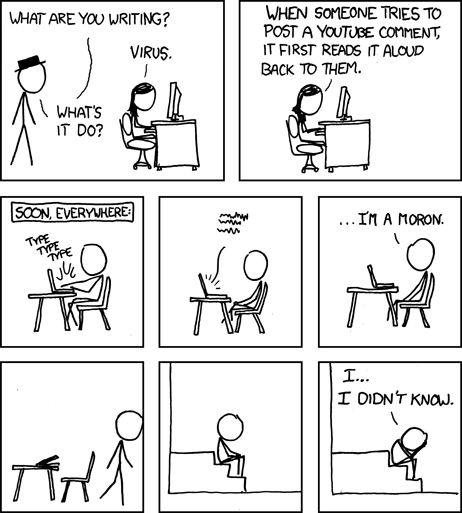
http://xkcd.com/481/
yWriter has an option for Microsoft Anna to read my text back to me.  Nothing like the aural version of a .txt doc to really point out the [lack of] flow in your narrative.  

Not a user of yWriter?  You could always try yRead.  Also good if you have laryngitis and the phone rings.  True story.


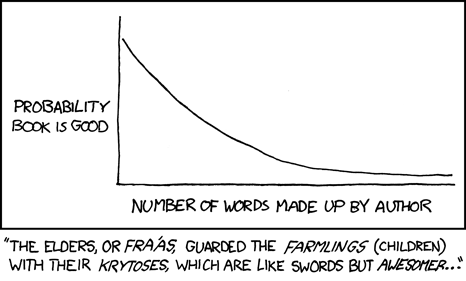
http://xkcd.com/483/

  Does Smerp count?

Monday, 26 August 2013

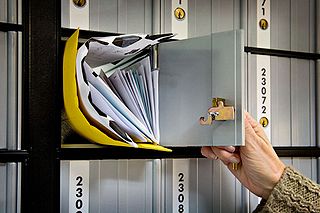
Postbox in Schenectady

By United States Postal Service (Wikipedia:Contact us/Photo submission) [CC-BY-SA-3.0 (http://creativecommons.org/licenses/by-sa/3.0)], via Wikimedia Commons
One would like to think these are contracts, not returned mss.
Sometimes I actively go looking for story ideas.   When I do, I do not latch on to the first thing that pops into my head.  Nor the second, or even the third.

When I brainstorm, I’ll write down all ideas as they come to me.  Then I ditch the first handful that came in. (Stop pulling out your hair!  Ideas are dime-a-dozen.  You can have my discards if it bothers you so much.)

Why on earth would I do that? 

Because those first few ideas were the most obvious.   I don’t wanna write the obvious.  I want to explore the obscure, the hidden, the new.  Road less traveled. Forgotten country. 

Essentially, I wanna make people consider something they might not have thought of before.  If I choose to write a fairy-tale retelling, you can bet your sweet britches I will steer far clear of Cinderella and Beauty and the Beast.   Overtold, overdone.   Go find something better.

A good writer should have some mad research skillz.  Go off and find something obscure.  Obscurity will not mean the story will be any less fascinating. In fact you may find it far more interesting, because you won’t have to compete against all the other writers’ interpretations.  Nothing sucks worse than discovering someone has already done your brilliant idea, and did it better.
____________________________
By day, Her Grace beats her head against an office cubicle wall.  By night she pinches ideas from the pockets of unsuspecting muses and discards them at random.  Occasionally they make it into stories or Relief Society lessons.

Friday, 23 August 2013

So, wanna write a book?

Lots of people say they want to write a book. “I have a novel in me.”

When they say that, I always, without exception say, “Go for it. Write that book.” I don’t think I will ever discourage anyone from writing a book. More people should give it a go, I believe. Writing’s good for the soul.

Alas, most people never do [write that book]. If they regret not doing it, that’s their own fault.

I’ve never heard anyone who has written a book say, “I wish I never did that.” (Then again, I hang out with people who want to write, and do write, books.)

So, wanna write a book? Here’s some things you need to know.

  1. Don’t just talk about it. Go forth and do. Great. I’m glad you want to write a book. But until you put a word down on paper, it’s just a pipe dream.
  2. The first sentence is the hardest. It really is. It scares everyone, even me. A friend once told me the hardest thing about playing the clarinet was picking the darn thing up. Same thing with writing. That first sentence is the hardest. Once you’ve written it, everything else flows easier.
    I think the reason it’s so difficult is because the writer expects the first sentence to be brilliant. Here’s a secret; it doesn’t have to be. I sometimes get stuck wondering how to start. When that happens (sometimes recognised as “writer’s block”), I write the following: “I will write a sentence.”
    If I am still stuck, I will also write, “and here’s another,” followed by, “This is what I want to write about. Our Heroine is upset about…” and then I start writing about what I want to write about. Eventually I segue into the actual WRITING writing. I can go back and edit out my motivational nattering later.
  3. Everything doesn’t have to be perfect. That’s another thing that gets writers stuck is the belief (either conscious or subconscious) that everything has to be perfect. It doesn’t. Nobody cranks out clean draft the first time, not ever. Don’t be fooled. Every writer does an editing pass or ten once the draft’s finished.
  4. Start the sucker. Finish the sucker. For every two people who never start their novel, there’s one person who never completes it. Sometimes they realise just how long a novel is (80-120K, average), or maybe their idea wasn’t as good as they thought it was, or they’ve forgotten, or it’s not that important. Whatever. There’s a million reasons why novels don’t get finished.
    But deep down, if you wanna write a novel, commit to finish it, no matter how short it ends up, no matter how bad. The triumph of finishing a novel in the first place is worth it. So what if you peter out at 20K. So what if you get sick of it and the final chapter is “And then aliens came down and shot them all, The end”? That’s okay. Do it, finish it, celebrate.
    In November, try NaNoWriMo.
  5. The first novel sucks. Accept it. The first novel anyone writes will be terrible. And that’s okay. Allow yourself to accept a sucky first novel. It’s your initiation badge of honour.
    My first novel, The Atomic Girl, really sucked. Second novel, Legacy of Leporis, also sucked. Third novel, The Marvelous Adventures of the Great…whatever, I forget, totally Mary-Sue sucked. Fourth novel, first draft of Of The Dark, sucked a bit less, but still sucked (great idea, poor execution). Fifth novel, Daughter of a Lady, less suckitude, but not the best idea. Let Sleeping Gods Lie, getting better.
    And so on. It’s taken me this long to get good. That’s just me. Lots of other people wrote a sucky first novel, then a brilliant second novel, which sells.
    But the first novel always sucks. Don’t tell yourself any different. Don’t berate yourself either.
  6. Write until you get it out of your system. Everyone wants to write a book because they’ve got The Itch. Go ahead and scratch [with a pen on paper] until the itch goes away. Some people complete a novel, and that does it for them. That’s okay. If you’ve only got one novel in you, you’ve only got one. Write it, get it out of your system, then go on with your life. We don’t mind.
    Then there are those of us for whom the itch never leaves . People like us, we’re called novelists. Best way to deal with us is to go away and let us write.
  7. You don’t have to get it published. Some people mistakenly think that the only way to achieve validation is for the novel to be published. Not true. An unpublished manuscript is just as valid as a published manuscript. But if you want something tangible to hold in your hand, I’m sure Lulu (who is happy to print anything) can print a few, very nice looking, personal copies. Just keep it personal.
  8. Nobody owes you anything. Don’t think that just because you’ve poured a whole bunch of blot, sweat and fears into a manuscript that the world owes you accolades. Completing a book, no matter how good or bad, is a personal achievement. Keep it that way. Sure, you could go the publication route, but keep that pursuit for your second book. The rest of the publishing world will agree with me.
    Effort does not equal genius.
  9. Want to be published anyway? Go do your research. There’s a whole lot more involvement when it comes to pursuing publication. Educate yourself as much as you can, young apprentice. Go write another ms. (This is mandatory.) Go learn what “ms” means. Go workshop. Go network. Build a positive online brand. Write some more. Read Miss Snark, Preditors & Editors, Query Shark, and random author blogs. Go hang with other writers, preferably ones who are enjoying at least a modicum of success. It’ll rub off on you. (Don’t hang out only with bitter, unpublished wannabees. That’s the train to Nowheresville.) Get used to rejection and disappointment. It’s part of the territory.
  10. Overall, be glad of the journey. So, you wanna write a book? Do so, and let it bring you joy. So what if there's a few rocks in the path? Take joy in starting a book. Delight in adding to it. Rejoice when you complete it. Keep a positive attitude if you pursue a more professional path.

Wednesday, 21 August 2013

How I Write a Novel

So, more on how I work:

I’ve got my novelling process down to a somewhat ordered format. Conception, pre-writing, outlining, drafting, editing, done. Often these steps overlap.

Conception: This is where I come up with the idea for a novel. Sometimes a character arises, and I want to tell her story (Grace Anson). Other times a situation happens, and I want to know more (what happens if the farmboy says no to the quest?). Sometimes I’ll do the ol’ “What If…?” (What if a valley is unfarmed because it is haunted?)

Pre-Writing: this is where I start putting elements of the story together. This often happens simultaneously with Outlining. As I get characters and scenes and story neepery, I write it down. This is where the real writing of the novel happens. From the outside, this process looks an awful lot like this:


But inside, there’s a whole lotta hampster wheels cranking away.

I’ll have most of the novel written out in my head before I actually start putting words to page. The characters play out their scenes and have their dialogues and fights and other happenings. I do my best to remember what happens, and often take notes.

Outlining: Happens during the pre-writing stage as I take notes. This is where I start ordering scenes. I’ll put down what happens in a scene, who’s involved, where it’s happening, and what important thing needs to happen. I’ll also make encluing* notes. I like to have my outline in place before I officially write scenes. (Snippets of dialogue from pre-writing don’t count.)

Drafting: By now, most of the novel is done (in concept). Here’s where I BIC (butt in chair) and do the actual scribing onto the page. I mostly follow the outline, but sometimes little things will pop up. I’m okay with that, if it fits in with the overall plot. If something does crop up, I’ll go and stick it in the outline. Because I know most of how they story’s gonna unfold, I can simply write it all down, without having to pause to think much.

Editing: Once the draft is done, I’ll let it sit for a while. Sometimes my brain will fill in subconscious details that aren’t on the page. When I let a ms age, I can come back to it with fresh eyes. Then the holes are more obvious. I’ll give it an editing pass or three, maybe let it sit a bit longer. Whatever.

Done: Once I’m done with a draft I like, then it’s ready to do the rounds with the beta readers. I’m fond of OWW but sometimes it can take a long time to ‘orkshop an entire novel. Otherwise, I’ll toss it out to a couple of mates and other random volunteers.


*enclue (en-clu’) en-clu-ed, en-clu-ing - v: to stick clues or other subtle-yet-pertinent information into a story. Covers hints and clues leading to the truth, but not necessarily red herrings.

Monday, 19 August 2013

Can't Pants

I can’t pants it. I can’t write organically. I’ve tried.

I’ve gotta consciously know where I’m going. I’ve learned that if I don’t know how the story ends, I can’t finish it. Many a novel and short story of mine has floundered because of this.

I did finish a novel once, trying (somewhat) to write it organically. The ending turned out pretty pathetic. I think at that point, I was simply trying to finish a novel, pushing through.

My next novel, I wrote a four-page, scene-by-scene outline (sixty-four scenes!). I knew how it began, I knew how it ended, and I knew what had to happen in the middle. Result: finished novel I was happier with.

Since then, when I conceive a novel, I begin with a concept or spark. (Regency Romance with Magic! -or- “I am currently unsupervised. I know. It scares me too, but the possibilities are endless!”) I work out my main characters (always called Our Heroine, at first), then I work out the bones of the plot, including how it ends. Especially how it ends. I don’t have to be specific on the stuff that happens in the middle, but I must have that ending.

If I don’t have that architecture in place, I’ll end up floundering somewhere in the middle, then peter out, wondering, “Now what?”

(And now, let us have a few moments of silence for all the novels I started without knowing how they ended, and are now resting forgotten in the bottom of the trunk. Sorry, Marinda.)

Friday, 16 August 2013

Personal Style Sheets

A novel’s a big thing. Naturally, you’ll forget the little details—the colour of the hero’s eyes, the spelling of a name, the location of a temple, that sort of stuff.

A personal style sheet comes in useful. This contains a roster of all your characters, their characteristics, goals, personal quirks, particular spellings and more. It can also contain any maps, important plot points, and continuity notes. Heroine left her parasol at Gunter’s? Then she shouldn’t have it with her at Almack’s. Style sheets can help avoid these sorts of errors.

Now, I don’t get stuck up on all the formal layout and spelling and stuff (except for proper nouns. Keep names and words unique to your universe consistent). But I do want to know important things.

I once wrote (most of) a novel organically. In the first few chapters, I had X happen, and a McGuffin went missing, thus creating an important plot point. Then about chapter eight, the missing object showed up without fanfare, and became part of a very important plot point. When Plot Point #3 came along, I had forgotten what had happened in the first part of the novel, so I went back for a read.

Oh, the continuity errors! If I went back and fixed one thing, it completely ruined the other thing. In the end I had to scrap that novel and redraft it.

Lesson learned: I work best when I draft out the outline first, including making notes about important things. Then I can sit down and crank out wordage.

When I work on a ms, I’m always taking notes. Thankfully, yWriter, my noveling software of choice, has a section for notes. (It’s also got places for listing character bios, locations, McGuffins and more.)

How do you keep track of the minutae of your ms?

Monday, 12 August 2013

Thoughts on Voice


When an agent or an editor reviews a submission, one of the first things they look for is voice. It is one of the elements that hooks a reader on page one.

Voice conveys mood. Is your voice light and breezy or dark and brooding? Is it formal or conversational? Does it absorb the reader, or distance them through tediousness?

It takes some practice to develop a workable writing style. A good place to start developing an addictive writing style is to read books whose writing style you admire. Take some time to analyse the writing style. What sentence structure does the author use? What kind of vocabulary? How’s the pace and rhythm? A strong writing style will provide a good platform for an author’s voice.

How does the writing make you feel? This is the important bit.

When you analyse someone else’s style and voice, make note of how it feels. Is it formal and dry? Brief? Witty? Poetic? What’s the sentence structure like?

If you wish, you could attempt to write something in someone else’s style. When you are done, put this piece away, and revisit it much later. Weeks, months, years, maybe. Go over it, and ask yourself, what if *you* were writing this piece (and not Hemmingway), what would you do different? What would you change?

Find something you wrote ten years ago. Have a look at how you used language. Does that earlier work make you cringe? Why? Figure out what it is you don’t like about it. Also recognise what you did right. You need to do more of that.

Another point to consider: voice isn’t just what you’ve put on the page. It can also be what you didn’t put on the page. Picking on Hemmingway again, his style was quite terse. But it was effective.

There really is not right or wrong when it comes to voice. But there is good and bad (and a muddled middle subject to personal taste). A good voice uses language in a very effective manner, evoking setting and mood without weighing down the text. Balancing this out is a matter of practice and relaxing. No matter how much you want to, you can’t force it. In fact, if you try to force it, it’ll lock up and you’ll sound stiff. Take it easy and write without worrying about how it’ll end up. Freewrite stuff without the goal of doing anything with it other than write it. Chances are your voice will come out more in this work.

I recently had some issues with my voice. I couldn’t figure out why stuff I wrote sounded so… blah. Eventually, I figured out my sentence structures were too formal, and too long. I was using a lot of “which” and “that” and “then”. I was trying to connect up causality, when I really needed to let facts speak for themselves. I needed to trust my readers.

No doubt there are a few other elements I haven’t discovered yet. Those’ll reveal themselves with time.

Thursday, 10 November 2011

Thoughts of a professional writer

I took the first two weeks of November off from my Day Job to be a professional writer. I've never done anything like this before.

Yeah, I've had great swathes of time on my hands before, and dabbled a bit at my writing career, in between doing all sorts of other stuff, but I never approached it then as I am now.

For the past two weeks, I told everyone and especially myself that I was a professional writer.

And then I approached it as a professional would.

Every morning I'd get up, have breakfast, see Their Ladyships off to school, then I would sit down, fire up the laptop and get to work. I made goals, I set targets, I had a deadline imposed on me by someone else and I made myself accountable to them.

And you know what? I got some serious work done. With the exception of the Sabbath and one day I told a friend I'd help her with something, I've been pulling in about 4K words a day. That's serious mojo. I also had time left over to devote to editing other projects and sending out a few things to publishers.

And all done before Their Ladyships got home from school.

First few days was easy. Last few days was hard, as I found myself wanting to rebel against the structure I'd imposed. But yesterday, I gathered my courage, sat down, and did my wordage. Today, same thing.

Next week I go back to work, "full-time school" hours. I go back to squeezing in writing when I can, between the Day Job, the Extracurriculars and the Family. I'm going to miss being a professional writer. I don't know if I'm going to like the fly-by-night moonlighting style of being a writer, even though most of my published mates work that way.

Treating writing as a professional day job was eye-opening.

I've not done the like before, but after a week and a half of serious BIC, I'm thinking that yeah, maybe I can do this sort of thing on a more permanent basis.

I've just got to figure out how to get me some more of that.

Friday, 17 October 2008

Run with the big dogs

I love writing fiction, but if I want to make money writing, I write non-fiction.

Pitching non-fiction involves searching out possible magazines, reading a few articles, then querying the editor with ideas.

I've spent the morning browsing through markets, looking for my next sale. Some magazines I'll glance through and decide whether or not I'll pitch.

Some magazines I'll start reading and I can't stop. They have my interest. I should pitch to them.

But I get nervous. How could I possibly write anything that good?

Really, I should stop procrastinating (aka blogging) and just pitch an idea already! THe worst thing they can do is never get back to me. A distant second is for them to say no. And if they do, that doesn't hurt. I just pitch the idea elsewhere...

...as soon as I can find a market for it.

Saturday, 30 August 2008

New Romance... or is it?

Over on LiveJournal, AlleyPat discusses Colleen Gleason's article “The New Romance?” and whether or not the HEA (Happily Ever After ending) is necessary to call a romance tale a Romance.

Now, is an HEA necessary, and I mean ABSOLUTELY necessary to make a romance a Romance? For the most part, pretty everyone would say yes.

But there is a trend in some of the crossgenre works to have a strong romance plot and yet not feature an HEA. Some are calling this the New Romance.

Me, I don't know if I want to give it such a label. Genres evolve. They change, they adapt. I think the overwhelming oppression of HEA requirement may stifle some of the strength of storytelling. From the very beginning, you know Our Hero and Our Heroine are going to get together and everything will turn out all right. This knowledge can take the tension and delicious suspense out of a story. It becomes not so much a question of will they get together, but how it'll happen.

I'm starting to think this is weakening stories.

Compare two TV shows I've loved in their time--Star Trek and BBC's Spooks (aka MI5).

In Star Trek, you know no matter what, the main crew will survive whatever comes their way. You know they're going to outsmart them, what you don't know is how. (But woe the Red Shirts. This is a series of disposable extras.)

Then there's Spooks. They get into all sorts of scrapes, and there is some serious tension. Not only do you wonder how they're going to get out of the scrape, but you have some serious angst about whether or not they will. Forget Red Shirts. Spooks features disposable regulars. Main characters die all the time, and it puts some serious tension into the show.

Now, back to Romance. Most of the Romance published in the past thirty years has mandated each story have an HEA.

Perhaps readers are no longer requiring an HEA, because they prefer deeper tension in their stories.

And there is nothing wrong with that.

But there is also nothing new about it.

Georgette Heyer (if you read romance and you haven't heard of her, go google her) has written stories that don't feature obvious HEAs. I recently read her "Cotillion". For pretty much most of the book, I wonder if Our Heroine is going to end up with the guy she's in a sham engagement, or the fancy lord she had a young crush on as a child.

Now, this story isn't exactly "new". It was published before most of today's authors were even born.

Want another romance story that features Not-an-HEA? Romeo and Juliet.

If anything, the mandatory requirement that all Romance stories feature an HEA is the New Romance, and hopefully a genre straitjacket that will be loosened and we can discover the true tearjerk of a bittersweet ending.

Friday, 1 August 2008

Writerly Firsts

A writer has a lot of firsts that make up the milestones of one's career. Some are wonderful, some are not.

How many have you had?

First story completed.
First submission.
First rejection letter.
First acceptance.
First paycheck.
First publication.
First fanmail.
First incidence of plagiarism.
First repeat assignment.
First agent.
First contract.
First galley.
First booksigning.
First good review.
First bad review.
First hate mail.
First advance.
First reprint.
First missed deadline.
First fired agent.
First mistake to get past copyeditor, galleys and typesetters.
First manuscript auction.
First Guest-of-Honour appearance at a convention.
First stalker.
First three-book contract.
First best-seller.
First "retirement from day job".
First personal secretary to handle everything else while you write.
First posthumous publication.


Any other firsts to go on this list?

Wednesday, 23 July 2008

Go study what you want.

If you want to be a physicist, you go to college and study physics. If you want to be a psychologist (and why on earth would you want to?) you go to college and study psychology. If you want to become an historian, a musician, a geneticist, that's what you study at school.

So what if you want to be a writer? Does this mean you should study Creative Writing at university?

Australian author Justine Larbalestier says no.

For the most part, I agree with her.

Of all the useless classes I ever took at university, the Creative Writing ones were the second most useless ones ever. (Archaeology takes top billing in my book.) My CW classes were full of pretentious snobs who, if you didn't write true Lit-ra-choor, you were not worthy to muddy their boots. They were cliquish, stuck-up and narrow-minded.

Not good if you wrote genre stuff (like, say, fantasy or romance).

So I spent two hours a week of every quarter (for a year and a half) suffering the toffee-nosed abuse of people who thought they were beyond elite.

If I hadn't already been published, if I didn't already have a writing mentor, and if I wasn't so in love with storytelling, those classes would have turned me off writing for good. I can't think of a single one that didn't make me cry.

I describe my CW classes as the second most useless, because despite the abuse, I did learn one useful thing: the Milford Method. Hallelujah.

So, should a bright-eyed young aspiring author major in CW?

No. Really, there is no need.

In fact, it is better if they don't. Instead, I say to them, go study something--anything--else. It'll benefit you in the long run. First, it'll give you something to write about. Second, it'll give you a broad interest base. Third, you'll probably gain marketable skills; after all, all writers have a Day Job to support themselves while they write. Fourth, you probably won't suffer the abuse many poor genre writers do in CW courses. Fifth, we won't lose you to the Dark Side.

Really, unless you're getting a specialised job, nobody cares what you got your degree in. So go be a history or an economics major.

So you've earned a BA or BS in Underwater Basket Weaving. Cool. Still wanna study CW? Well, that's what Master's Degrees are for.

Okay, you don't need a MA to write and be published. There's only two purposes behind pursuing an MA: one, getting to add more letters after your name and two, being able to indulge yourself in writing for a few years. That alone makes it worth getting.

Another (side) benefit of an MA, it looks good on your application for grant money to sit home and indulge yourself in writing.

Other than that, it's unnecessary.

What? You still wanna be a writer? Yeah, okay. But why do so many young people have the mistaken impression that one must go to college? That's not how a writing career works.

It's an old-fashioned apprenticeship. You simply sit down and do. If you're lucky, you can study under the guidance of a master (aka writing mentor, like I did), and belong to various writing groups, both face-to-face and online. But for the most part, it's up to you to seek out the knowledge and the feedback.

And like an old-fashioned apprenticship, you spend some time as an apprentice (developing your craft, finding your voice, collecting rejection slips) then you become a journeyman (developing your craft, honing your voice, occasionally getting published) and then you can become a master (developing your craft, indulging your voice, regularly getting published).

You don't need a formal college education to do that. In fact, most writers I know didn't study CW at university.

If you want to get a CW degree, I can't stop you. But please realise there's a big, wonderful world out there. Go study what you want.

In the end, you'll still be a writer.

Wednesday, 16 July 2008

The Next Big Thing

Many not-yet-published writers think that one of the things that will improve their chances of getting a novel published is a practice known as "jumping on the bandwagon". This is where they try to get in on whatever the hottest publishing trend is at the moment.

Several years ago it was wizard boys and religious conspiracies. Currently it's vampire romance.

However, jumping on the bandwagon is not a benefit to getting published. Quite the opposite--it is much, much harder to be published in a market glutted by vampires falling in love with wizard boys despite the warnings in St Mark 57:12.

Why? Because by the time a book hits the shelves, the "fresh and new" ship has long sailed.

For readers, sure, the trends are happening right now, and you can easily pick up a book on the current hot topic in the bookstore. But for writers, agents/editors and publishers, the trend readers see on the shelves this week happened two, three or even four years ago.

How does this happen?

An agent or editor has a novel come through that's well-written, hooky and has a fresh idea. "Cool," they say. "I think this might be a winner." Their professional instincts are right. The publisher picks this up in a nice deal and the book sells wonderfully on its first print run.

Now, sometime during this process another editor will come across a novel, also well-written and hooky, that deals with similar themes to the first novel. "Hmmm," they think. "I wonder if we have another winner?" It too, goes to press in a nice deal and does well on the first print run.

Perhaps it happens a third time, this time in a very nice deal, possibly brought on by the excellent sales records of the first two novels and the next thing you know, we have a trend!

Now, editors and publishers don't sit around and say, "I think we need a trend on fae-folk-in-captivity." The trends are arbitrary. They happen at random and nobody can really predict what will be the next big trend.

But if you wanna have a shot at it, Nostradamus, don't look at what's hot right now, but have a look and see what's not being published, and hasn't been published for the past twenty (thirty?) years. These are the areas that have the best chances at becoming the next hot trends because in the marketplace they will be seen as fresh and new.

Now, that's an awful lot of topics, and choosing the one that will be the next big trend may be a shot in the dark, but at least you'll be shooting forward instead of shooting backward at the dead rabbit that's already been skinned, hassenpfeffered and consumed.

However, hopping on the bandwagon is not what secures these nice deals or even very nice deals. It's writing well and being hooky. Books are published because of this, and only then do the trends follow.

Saturday, 12 July 2008

Being a "Real" Writer

A friend of mine had a good cry on my shoulder the other day. Being a writer, she works hard on her craft, and has gained a pretty good mastery over it for her needs.

Her source of misery? A non-traditional reader's comments disparaging her chosen field.

See, she writes fan-fiction. She's really good at it, having several novel-length works under her belt, and a bit of a fandom of her own.

I love fan-fiction. Used to write fan-fiction as a way of developing my own mastery of the craft. (Alas, I don't have the time now.)

Fan-fiction is a good tool for working on one's craft.

1. The love is already there. To write really good stuff, one must love what one is writing: the characters, the world, etc.

2. Instant fan base. You wanna write Snape slash? There's someone out there that wants to read it.

3. Quick feedback. Readers of fan-fic will respond to your posted works, with everything from "I loved this!" to detailed critiques. Snag a few good beta readers, and your mastery of the craft grows in leaps and bounds.

So why does fan-fiction have a bad rap? Its biggest critics claim it's "derivative and unoriginal".

Okay, granted, fan-fiction writers are borrowing characters created by other writers. Unless the fan-ficcers plan on passing off these characters as their own, I don't see anything wrong with this.

But the rest of the story? Pure originality. Fan-fiction writers take characters and develop them. They delve into areas that the original writers didn't cover (for whatever reason) They come up with new plots. They explore the unexplored territories.

Sounds like being a television writer. They're given characters and a situation and even settings and told to come up with a new plot each week.

Only difference is that television writers get paid.

Another argument some people use against fan-fiction: "If you didn't get paid for it, it's not real writing."

You know, I've heard this one a dozen times from lots of people who aren't being paid to write. I have yet to hear it from a paid writer. I'm not sure why that is.

So it's a law that fan-fiction writers cannot earn a profit from their fan-fiction. After all, the rights to the characters belongs to their creators, and if any money is to be made, it must go to those who hold the rights.

One could argue that fan-fiction itself is illegal. But authors tend to turn a blind eye for the most part. Fan-fiction is one of the most sincerest forms of flattery.

Enough about the legalities; more about the craft.

Writing is writing. Every writer wants to become a better writer--that much they have in common. Why they write, that diverges. Some write for themselves, some write for small audiences, and some want to write for bigger audiences. Some love writing fan-fiction for an audience that pays in whuffie and adoration. Others prefer writing fiction with commercial potential (and comes with ca$h).

To say that fan-fiction isn't "real writing" because it borrows established characters or doesn't turn a profit shows true ignorance of the writing craft.

A writer writes because they want to. The real payday of writing is not whether or not you get paid, but if you entertain your audience--whomever they may be.

So my friend knows this. Intellectually, logically, she knows this. But her heart wanted approval.

For the most part, she gets approval from her traditional audience, and well she should. But when someone who isn't of her traditional audience asks her if she's a writer, she told them she was. That seemed to impress tem and when they wanted to see something of what she'd written, she gave them a sample of her work, and, well...

One can't please the whole world. Be happy with the few one can please, and above all, please oneself first.

Wednesday, 28 May 2008

Gee, it's drafty in here...

So we Spinners have been working hard on our drafts for the next anthology For Richer, For Poorer, and we're bantering around our word count totals, hoping to fall somewhere in the realm of, say, a book (as opposed to a pamphlet or a Fantasy Brick).

So, I'm seeing totals like, 8K, 13K, and so on, for the contributions of the other Spinners.

And then they ask me: "So, Heidi, what have you got?"

"Um, I'm sitting about 27K about now."

*BOINK!* "You wha-?"

I hastily calm my fellow Spinners. "It's just the draft at the moment. I plan on cutting out several thousand words."

"Oh...kay... So, what do you estimate your final count to be?"

"Um... 23K?" Wince.

Mmm... yeah. All right. We'll see. I think I've accidentally written a novel.

If I could get this story down to 20K, I'll be happy. But I don't know if I'll be able to do that, unless I trim down a few conversations, take out a bit of snark between some of the characters and tighten up a few things. I could cut out some of the world-building, but don't know what or where.
A tighter story would be good. And I might be able to do without a dinner scene. We'll see.

Meanwhile...

How well do you know British actor Richard Armitage? I scored 10/10 on this little quizzie. (Not quite the same as scoring with Richard, but I'll take what I can get.)