Showing posts with label science. Show all posts

Wednesday, 7 August 2019

Go Hard-Core with Science!

By the time you read this, I'll be at the Romance Writers of Australia Conference 2019 in frigid Melbourne, AU. For the past month or so I have been so focused on getting my writing career together for this, that I haven't had any chance to science at all. AT ALL.

So, while I'm off being an author, you can get your science on.

Science is this beautiful, wonderful pursuit by the human race as they explore their world and the universe, from the smallest known particle to the largest mega-structure their marvelous minds can conceive.

Because you are a human being, do not be afraid to go hard-core when it comes to science. You don't need a fancy degree or even a knowledge of the vocabulary to dip in your toe.

But you must dip in your toe. Follow it with your foot, and then plunge right in. Do not make the mistake that oh-so-many online denizens do of learning one little factlet from some meme someone posted to their Facebook timeline and running with it, never more choosing to research deeper. That's just irresponsible and leads to issues like Flat Earthers, Anti-Vaxxers and the "Mobile Phones Cause Cancer" crowd.

There's a lot of hard-working, dedicated scientists out there who are doing the hard research. When they do, they publish their results so everyone can have access to them and see what their work is on.

And yes, you can read these papers as well (or their abstracts at least).  Abstracts are free. Sometimes the papers are behind paywalls. Sometimes they're free-and-easy access on arXiv.org.

DO NOT BE AFRAID TO LOOK AT THESE PAPERS! Do not think that they are limited to just scientists. You can read them too. If you come across a word you are unfamiliar with, the Dictionary is your friend. Consider it leveling up by learning new vocabulary. It's not that scientists are being deliberately obtuse; quite the opposite--they are aiming for precision. English is one of those beautiful languages with hundreds of thousands of words (okay, most of them obscure) that precisely define something. When a scientist chooses a particular word, it defines and constrains the  meaning to an exact definition.

So, how do you find these papers?  For astronomers and astrophysicists, we use a database called...

The SAO/NASA Astrophysics Data System


Say you wanted to see what's been published regarding Water on Mars in the past few years?

I put in a range of dates from 2016 up to next month. My keywords were "water on Mars".  I hit the search button.

These were my results. It pulled up 1,605 papers that had anything to do with water and Mars. Now, some of the titles make even my eyes glaze over, but I trawled through until I found something interesting.


Hmm, which one to choose?  Best way is to read the abstract.

An abstract is kind of like a back-cover blurb that gives away the ending of the story. Most useful if you're trawling through looking for a paper about a particular topic.

After reading both abstracts, I chose to have a closer look at Follow the Oxygen.

Here's the abstract: 
Aerobic respiration—the reduction of molecular oxygen (O2) coupled to the oxidation of reduced compounds such as organic carbon, ferrous iron, reduced sulfur compounds, or molecular hydrogen while conserving energy to drive cellular processes—is the most widespread and bioenergetically favorable metabolism on Earth today. Aerobic respiration is essential for the development of complex multicellular life; thus the presence of abundant O2 is an important metric for planetary habitability. O2 on Earth is supplied by oxygenic photosynthesis, but it is becoming more widely understood that abiotic processes may supply meaningful amounts of O2on other worlds. The modern atmosphere and rock record of Mars suggest a history of relatively high O2 as a result of photochemical processes, potentially overlapping with the range of O2concentrations used by biology. Europa may have accumulated high O2 concentrations in its subsurface ocean due to the radiolysis of water ice at its surface. Recent modeling efforts suggest that coexisting water and O2 may be common on exoplanets, with confirmation from measurements of exoplanet atmospheres potentially coming soon. In all these cases, O2accumulates through abiotic processes—independent of water-oxidizing photosynthesis. We hypothesize that abiogenic O2 may enhance the habitability of some planetary environments, allowing highly energetic aerobic respiration and potentially even the development of complex multicellular life which depends on it, without the need to first evolve oxygenic photosynthesis. This hypothesis is testable with further exploration and life-detection efforts on O2-rich worlds such as Mars and Europa, and comparison to O2-poor worlds such as Enceladus. This hypothesis further suggests a new dimension to planetary habitability: "Follow the Oxygen," in which environments with opportunities for energy-rich metabolisms such as aerobic respiration are preferentially targeted for investigation and life detection.

Oh-kay... lots of big scary words if you're not an astrobiologist. But once you look them up, you'll see that Lewis, Vlada, Kevin and Woodward were being rather precise when they wrote the abstract.

Let's take bits of this apart and see what it really means:

"Aerobic Respiration..." - essentially, breathing oxygen, specifically, life forms breathing oxygen. While they gave a very detailed definition (and they had their reasons for it), essentially, the whole sentence is about how breathing oxygen is the preferred method of using oxygen in our metabolisms here on Earth.

"Aerobic respiration is essential..."  Advanced lifeforms like us and the cats in our laps need to breathe oxygen. Lots of oxygen on our planet means lots of life.  

"O2 on Earth is supplied by..."  photosynthesis. We all know that from Third Grade science. Plants make the oxygen we breathe.

But what if we could manufacture oxygen a different way? Do we need plants? Do we even need life, or can we source plentiful oxygen from a non-living method--an abiotic one that doesn't require a life's metabolism?  "...that abiotic processes may supply meaningful amounts of O2 on other worlds."  

The big question is, which came first? Oxygen or photosynthesis? If there's plenty of oxygen on another world produced abiotically (by a method not dependent on life, like a tree), could it be that this is what could allow multi-cellular life (like amoebae and rats and elephants) to be developed on other worlds? This is what the authors are thinking.

Until recently, space exploration has been dancing to the tune of "Follow the Water". Maybe it should be "Follow the Oxygen".

"This hypothesis is testable..." is music to every scientist's ears. Everyone loves a good idea, especially if it can be proven or disproven. Someone came up with an idea, and a way of proving it (or disproving). This is what makes science so groovy.  [end abstract]

Reference
Ward LM, Stamenković V, Hand K, Fischer WW (2019) Astrobiology, 19, 6   (Yeah, that's ApJ referencing style.)

Now, if only the article wasn't behind a paywall (or you are a university student whose library has e-subscriptions to Astrobiology magazine (Vol. 19, No. 6 is the issue this appears in). Maybe I should have gone for "Paleo-Rock-Hosted Life on Earth and the Search on Mars: a Review and Strategy for Exploration" instead. Here's a link to the full article. It's about rock-eating life bigger than a single cell. It happened on Earth a long time ago. Maybe it's also happened on Mars. "These findings suggest that rock-hosted life would have been both more likely to emerge and be preserved in a martian context," the authors say.


Wednesday, 18 November 2015

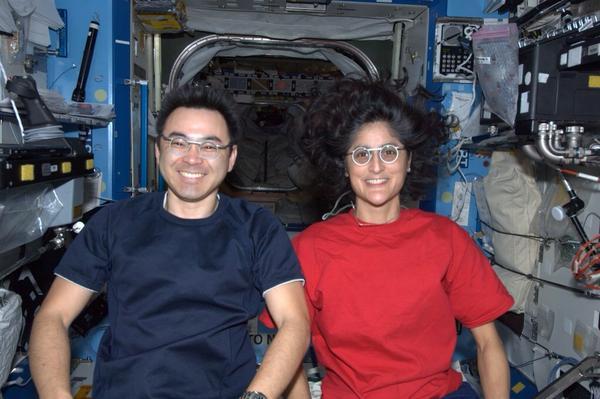
Astronaut dreams - TASE Day

Taking a break from NaNoWriMo and a momentary panic from a mixup with a galley and a novel that hates me and two final exams to indulge in a bit of TASE Day and some dreaming.

My first dream career (at age 3) was to be an Opera Singer. (FYI, I'm a coloratura mezzo-soprano, though I haven't had much operatunity to sing of late.)

My second dream career (and one that sustained me for the next 40+ years) was to be an author.

My third dream career (at age 8) was to be an astronaut.

Recently learned that NASA's looking for more astronauts.  Anyone can apply if they meet the criteria:

1. Bachelor’s degree from an accredited institution... 


 YES! I got one of those!


....in engineering, biological science, physical science or mathematics.
 Oh, okay, ne'ermind.  (Regretting not staying in biology for five seconds. However, my Bachelor in Arts has served my career well so far.)

2. Degree must be followed by at least 3 years of related, progressively responsible, professional experience...
Ah. I assume they mean STEM experience? Got plenty of the Fine Arts experience. Give me a few more years out staring at the stars and getting papers knocked back by ApJ and this could change.

... or at least 1,000 pilot-in-command time in jet aircraft.

Don't think I've even been a passenger in a plane for a thousand hours, much less clocked that amount of flight time.

2a. An advanced degree is desirable...
 
...and may be substituted for experience as follows: master’s degree = 1 year of experience [etc] ....
Now, my big question is, if my master's is in a STEM field, would that make up for my lack of STEM in my bachelor's degree?

2b. Teaching experience... 

...including experience at the K - 12 levels... 
...is considered to be qualifying experience for the Astronaut Candidate position... 
...provided degree is in a Science, Engineering, or Mathematics field.
Aw man!  Throw me a friggin' bone here!


3. Ability to pass the NASA Astronaut physical, which includes the following specific requirements:
  • Blood pressure not to exceed 140/90 measured in a sitting position
 120/60  -  noice!
  • Standing height between 62 and 75 inches
  I'm 64 inches.
  • Distant and near visual acuity: Must be correctable to 20/20, each eye....
Bother!  My eyesight is bad, alas.  We're not talking a slight nearsightedness. And I've got presbyopia*. The only correctable surgery that would bring my eyesight to the correct acuity would be a reshaping of my orbit cavities. That technology is still a ways off.  Unless they let me wear these funky astronaut eyeglasses, I'm out of the running:

Do you also dream of being an astronaut? Are you better qualified than I am? If so, go apply for Astronaut School and see if you can get in.

Meanwhile, I might see if they let middle-aged women into Space Camp.


*Presbyopia: you can spot who has presbyopia because they're the middle-aged people who have to hold restaurant menus at arms length in order to be able to read them. I developed presbyopia about five years ago.  His Grace, who exceeds me in age, has yet to develop it (or he might have and doesn't want to admit it).

__________________________________
Her Grace's fourth dream career was to be a teacher. Then she thought about how cool it would be to be an teacher/astronaut and then come back and tell her students about how cool it was to go to outer space, and if they wanted to go themselves, they needed to study real hard.  Then she learned about what happens to schoolteachers who go to outer space.

Tuesday, 2 December 2014

The Best Method to Untarnish Silver

Some of my fabulous silver (and some gold).
Like me, I'll bet you've got some beautifully romantic pieces of Sterling silver jewelry. Or maybe you inherited a lovely set of silverware from your grandmother. Or maybe you're on a Quest, and when you finally find the Silver Sword of MacGuffin, you discover it terribly tarnished.

Alas, silver tends to tarnish with age.

Here is one of The Best Methods for untarnishing your silver. (I'll explain why later).
  1. Fill a saucepan with 1.5 litres1 (half a gallon) of water. Add 1/4 cup of baking soda and 1/4 cup salt (NaCl). Bring to a boil.
  2. Line a second saucepan or a large glass bowl with a sheet of aluminium foil. 
  3. Place your tarnished Sterling silver jewelry (or magical sword) on the foil. It must have contact with the foil, the more, the better.
  4. Pour the boiling baking soda water over your jewelry and let it sit for a few minutes. The tarnish will disappear. If a piece of jewelry is severely tarnished, you may need to reheat the water or let the solution sit longer. 
  5. Once silver is untarnished, remove from pan (with tongs or a spoon, as it may be very hot).
This is how I keep my silver bright and shiny, especially as I have a bad habit of taking magical silver swords into brimstone-ridden hellmouths or wearing my silver rings into sulfer-ridden swimming pools.

Here's How It Works

Tarnish is silver sulfide (Ag2S). Tarnish happens when sulfer from the atmosphere, from a swimming pool, from food, etc reacts with the silver of your jewelry (or your silver teaspoons).

Many other methods of silver polishing removes that layer of silver sulfide. This is less than ideal. Yes, it's removing that tarnish, but it also removes a layer of silver as well. We don't want that.

My method above only removes the sulfer. It leaves the silver behind.

Essentially, what's happening is an electrochemical reaction. What we are doing is pulling the sulfer from the silver sulfide and making aluminium sulfide (Al2S3). Sulfer wants to be aluminium sulfide more than it wants to be silver sulfide. Therefore, when presented in an ideal environment (the hot water & soda/salt), it moves to the aluminium foil.

Want to know more about the science behind this? Learn how oxidation and reduction make it work.

______________________________
Has Her Grace mentioned just how much she loves science?


1If you are untarnishing magical enchanted silver swords, you may wish to increase this recipe at least four-fold to ensure complete coverage of the sword by salt/soda solution. Also increase the amount of aluminium foil to maximise surface contact. And you'll need a larger pan. Maybe a bathtub.

Wednesday, 15 January 2014

My Research Fun (or how to get infected)

I recently finished a short story featuring Gene Therapy applications. Your eyes might glaze over, but I found it fascinating!

For the purpose of my story, essentially, transgenes are inserted into cells via viruses for a beneficial purpose.

I love research.  I learn so many interesting things.  Enthralling. Engrossing. Mesmerising. Sometimes I get carried away, and find out I've spent hours and hours on all sorts of things.  It's a habit I wonder if I should curb or encourage.  Not sure.

Anyhow, back to introducing new DNA/RNA into cells via viruses.  If you were brave enough to click through to the Wikipedia article, you'd have discovered that all sorts of little issues prevent gene therapy from being a Really Useful Technology.  That's a shame. It's a fascinating concept.

It's a good thing I was writing a science fiction story. (Yeah, I write sci-fi too.)

Sci-fi is fun in that you can take some plausible science idea and "tweak" it a bit.  In real life, gene therapy isn't a wide-spread technology, but in my story it is.  Suspend your disbelief and play along at home.  This is why we call it science fiction and not science fact.  You want fact?  Go read Scientific American.  It's cool and is a hotbed for skiffy ideas.

In science fiction the science doesn't have to be exact, but it does have to be plausible. If, to 90% of the readers the science appears to work, they’ll suspend their disbelief and go with the flow.

Stories are about conflict.  Sci-fi takes an idea or a situation and posits, "What if?"

I had some conflict in that a certain number of cells required certain genes to make up for a default.  The best way to introduce those gene was by transduction with a virus. (Transfection, which is a cooler word, is the introduction of genes by a non-viral method. How disappointing. Not as sexy.)

Now, where'd the virus come from, and how do we prevent the body from wiping it out, as bodies are very good at doing?  Thus, an interesting quandary for the story.

The actual conflict comes between two biohacker sisters who are competing to get the best delivery method to save their dying mother.  Could I have written any old story about two competing sisters with a dying mother?  Sure.  But the fact that the potential to save her lies within their grasp adds just that extra bit more of emotional angst.

I also had a few other skiffy elements in the story, namely insurance company-mandated Humour Therapy and a Blues Club (complete with jazz) available by Rx only.

___________
Her Grace is fond of science, especially Biology and most especially Astronomy. How could she not write sci-fi?  Wanna engage her interest? Talk to her about stars and other heavenly bodies. She'll accept the demotion of Pluto, only because it means the re-promotion of Ceres.  If only Rosalind Franklin was given the same love.