Showing posts with label MFA. Show all posts

Friday, 6 December 2013

Likes and Dislikes

'Tis First Summertime (Birak, Season of the Young, as the Nyoongar call it.)  The sun rises early and sets late.  Whilst most of the English-speaking world is huddling down for a Long Winter's Nap, I'm taking my ease in the garden courtyard, surrounded by parsley and oregano.

I love summer.  I really, really do.  However, it rarely, if ever, rains, and I do miss warm summer rain.  Just don't get it here.
I love characters who know what they want and set out to get it.
I love characters who make a mark on the world and not just let the world make a mark on them.

I am most firmly decided: I love Fantasy as a genre.  Quick list:

  • Escapism
  • High Stakes
  • Otherworldliness
  • Different Sets of Rules
  • Smerps and McGuffins

I am also decided that I do not like Contemporary fiction.

Granted, much of what I have read recently is well-written. I cannot fault the mastery of the craft.

It's the subject matter that I cannot stomach.  Must Contemporary authors write about divorce, abuse, directionless lives, ordinary circumstances, tepid jobs, dysfunctional families, All The Time?  It is like everything and everyone is broken in Contemporary fiction and they don't get fixed.  Essentially, it all seem to be about them accepting their miserable lot in life.

The characters are weaker than the world that's beating them down. They are where they are because they have not been fighting against the world, but letting the world run roughshod over them.  As the plot progresses, it's not so much that the characters are doing something to improve their lot, but rather enduring all the crap thrown at them in hopes that something better--without much effort on their part--comes along.

Maybe I'm reading the wrong novels.   Where are the [Hello] Dolly Levis?  Where are the Auntie Mames?  The "Thoroughly Modern" Millies?  I want a contemporary novel where the characters might have been handed a few lemons, but by gum, not only are they going to make lemonade, but a really good lemon custard pie.  And lemon bars. And lemon chicken as well.

I get a lot of that in Fantasy.  Characters DO stuff. They're pro-active, possibly because if they're not, the Whole Universe will Collapse on Them.  These are High Stakes.  I like High Stakes, especially if the character fails at the High Stakes, others may suffer, possibly entire nations, if not worlds.

I want outside-the-box thinkers. I want characters whose actions and choices would make a fascinating Wikipedia entry.  Contemporary fiction just ain't doing that for me.

Running away to a small town to start a bakery because your jerk-fiance left you at the altar is not an interesting Wikipedia entry.  Running away to a small town to start a bakery that's really a cover for smuggling engagement diamonds in cupcakes. Not only did your jerk-fiance leave you at the altar, but it turns out this is a modus operandi of a whole lotta jerk-fiances, who want the rings returned. So jilted women turn to the new baker to get their rings to a jeweler who'll Ask No Questions to provide them with enough money to start a new life. (Hey, it could happen.)

Surely someone's written that novel, or its sister.  Kindly point it out to me in the comments, si t'il plait.

Meanwhile, I'm gonna go find a nice fantasy full of literal Let's Save the World.

____________________
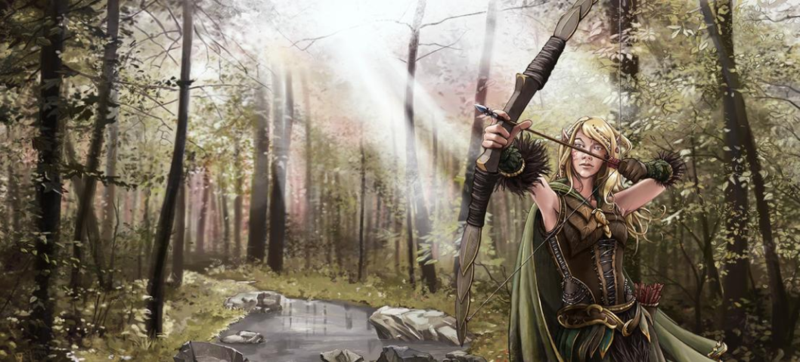
When not bemoaning unmotivated characters, Her Grace enjoys art by Kathrin "Kitty" Polikeit [GPL (http://www.gnu.org/licenses/gpl.html)], via Wikimedia Commons.  She offers her thanks to Kitty for sharing her art with the world.

Thursday, 5 December 2013

TBR Pile this week

On my TBR pile is:
Yes, I am up to the wee hours.
Why do you ask?

Three Sisters (Blackberry Island #2) - Susan Mallery.  Contemporary Women's fiction 
Leviathan (book 1) - Scott Westerfeld.  YA Fantasy Steampunk
Slave of Sondelle (book 1 of The Eleven Kingdoms) - Bevan McGuiness.  Fantasy
The Outcast Prince - Shona Husk.  Fantasy Romance
Financial Distraction - Dr Steven J Enticott.  finance non-fiction
The Complete Illustrated History of the Inca Empire - Dr David M Jones. historical non-fiction
Is Your Grandmother a Goanna? - Pamela Allen. Children's picturebook fiction

Have you read any of these? If so, what did you think?  Have you read other work by these authors?

MFA dithering:  As I attempt to read widely in fiction (and non-fic) genres, I am consciously noting my reactions to the fiction.  Language use is most interesting.  If I find the writing becoming "invisible" and I'm getting immersed in the story, I see that as a good thing. Then I have to go back and see what the author did right.  (I wanna do more of what they did.)

Sometimes I'd much rather immerse myself in the story and forget about analysis, but these MFAs don't earn themselves.

I'm also affirming my taste in particular genres.  I've always known I prefer X, but now I'm analysing why.


________________________________
When not reading fiction, Her Grace can be found reading non-fiction, as this nourishes the writerly reservoirs.  Rumour has it she's got a novella coming out soon.


Friday, 18 October 2013

Read Widely

What do you like to read?  Fantasy?  Romance?  Chick Lit?
A book is a book is a book.
Love them all.


How often do you read another genre? 

What?!  You Don’t?  (Oh, my bleeding heart.) 

Be brave this week, go to the library and get a book in a genre you don’t usually read.  Yes, it may be a bit harder to read, but it will give you some spiritual nutrition you didn’t realise you were missing.

Read for enjoyment.  If not, read for analysis.  If you put the book down and don't finish it, ask yourself why.  If you find yourself saying, "Oh, I just didn't like it," what were the qualities you didn't like about it?

Read a book that you'd be embarrassed to be caught reading.  (It's okay. You can borrow a dust jacket from a book with your kind of street-cred.  Use said dust jacket to hide the book.)

My TBR pile this week contains:
  • Where Are You Now by Mary Higgins Clark.   This is a thriller.  I'm trying to learn the difference between mystery, thriller and suspense, as part of my MFA.
  • Manuscript found in Accra -and- Like the Flowing River, both by Paulo Coelho.  Both are literary novels.  However, they sport positive messages of the greatness of Humanity.  Not many literary novels do that.  If you dislike literary because of it's dark dismalness, give Paulo Coelho a try.
  • Timeless by Gail Carriger.  Yep, finishing off this delightful Steampunk series.
  • Beta-reading a few mates' novels.
__________________
Her Grace loves a good book. She is due to raid the New Aquisitions Shelf at work. 


Wednesday, 9 October 2013

What the Heck is Supertext?

Short def:  Stuff everyone collectively knows.
Clark Kent's got supertext.


Long def (as required by MFA faculty):  In genre fiction, supertext is the body of information that belongs to that genre.  It is the collective set of rules or conditions or elements that help define that genre.  The more you know about the supertext, the easier it may be to understand any given novel within that genre.  Likewise, the more you know about the supertext, maybe you’ll look at a fresh element in a genre novel and refuse to suspend your disbelief.

Supertexts are living, changing things, dependent on their body of works.  The more elements that are used in more novels, the stronger the supertext becomes.

So, how's it work?

Gonna pick on vampires, as they seem to be in the public conscience of late.  (Vampire fiction is usually a subset of Fantasy, Horror and sometimes Science Fiction.)

So… stuff everyone generally knows about vampires:  they suck blood. They’re afraid of sunlight. They’re undead (or some variant of Not Human).  They’re strong. They’re hypnotic. They have long “lives”.  Sometimes they can turn into bats and fly.

You don’t need all of these elements to define a vampire.  You only need enough to invoke the supertext in a story.

Fr'ex: someone writes a story and says, “This undead character fears sunlight.  At night they turn into a bat.”  You, dear reader, are going to say, “Yup. Vampire.”

Fr'ex2: someone writes a story and says, “This character is a vampire.”  You, dear reader, know there’s gonna be a bit of exsanguination going on.

And that’s roughly how it works.  An author doesn't need to completely invent a new creature from scratch.  They can simply tap into the supertext and go from there.  Even add a few unique twists to make it theirs.

However, if you do go about tinkering with elements of the supertext, it’s gotta make sense within the context.

So.  Edward vs. Lestat.  Sparkly vampires vs N’Orleans undead.   Both are afraid of sunlight.  That element satisfies their vampiric supertextual definition.  Whereas Lestat’s rendered to barbeque upon contact with the gentle rays of good old Sol, Edward turns into a disco ball (or a New Adult at his first Mardi Gras ball).  Both good reasons to avoid the sun.

Some skeptics scoff at the thought of sparkly vampires.   But most people accept it.  They can suspend their disbelief, even though no other mythos features vampires that sparkle (unless you consider bursting into flames a form of ‘sparkling’).

So, why are so many readers saying, “Sparkly vampires. Cool”?   Because Meyer has tapped into another supertext—Fantasy creatures.

In the Fantasy supertext, various supernatural creatures sparkle and shine--namely, fairies.  Think Tinkerbell from Peter Pan.  Think Cherlindria’s fairies in Willow.  Think any kiddie show featuring friendly pixies and elves and wizards etc. (I can think of about four, as I have a plethora of little girls in my life.)

Supernatural sparkly beings is not a new concept. Deep down in our little tutu-wearing, wand-carrying little girly subconsciences, we know this.  That’s why we’re okay with Edward looking like he’s rolled around in K-mart’s teenage makeup section.  Oh yeah, and he drinks blood.

That’s your supertext at work.
 _____________________
In pursuit of higher learning, Her Grace is indulging in relatively useless bits of elemental analysis.  Can't call yourself a grad student without involving a bit of intellectual wankery.

Monday, 30 September 2013

Do Not Fear Literary Fiction

Estella's Revenge will read literature.
Some she loves, some, not so much.
If you are a genre reader, do not fear literary fiction. http://en.wikipedia.org/wiki/Literary_fiction

Yes, it can be difficult to read and understand if you’re not used to it.  Literary novels are about “being”.  Genre novels are about “going”. 

Literary fiction tends to be character-driven.  Plot takes a secondary seat.  Literary fiction is about getting to know someone(s).

Consider literary fiction a kind of “mystery”. Who is this character?  What clues are given to me? How are they feeling? What dilemmas are they facing?  As the world happens about them, how are they impacted?  Don’t worry so much about where they are going and their role in the plot, but rather dwell upon who they are, and why they are where they are.

Literary fiction is not meant to be read quickly. Take your time and revel in the beauty of the words.  Study the characters and get to know the whole of them.  Become emotionally involved.

Literary fiction plays with the English language. It pushes it to its limit. Sometimes it’s good to read literary fiction to see just how far English can go.
__________________
As part of her MFA from SoHK, Her Grace is currently reading and analysing Literary Fiction.  She has discovered that understanding leads to tolerance and respect.