 |
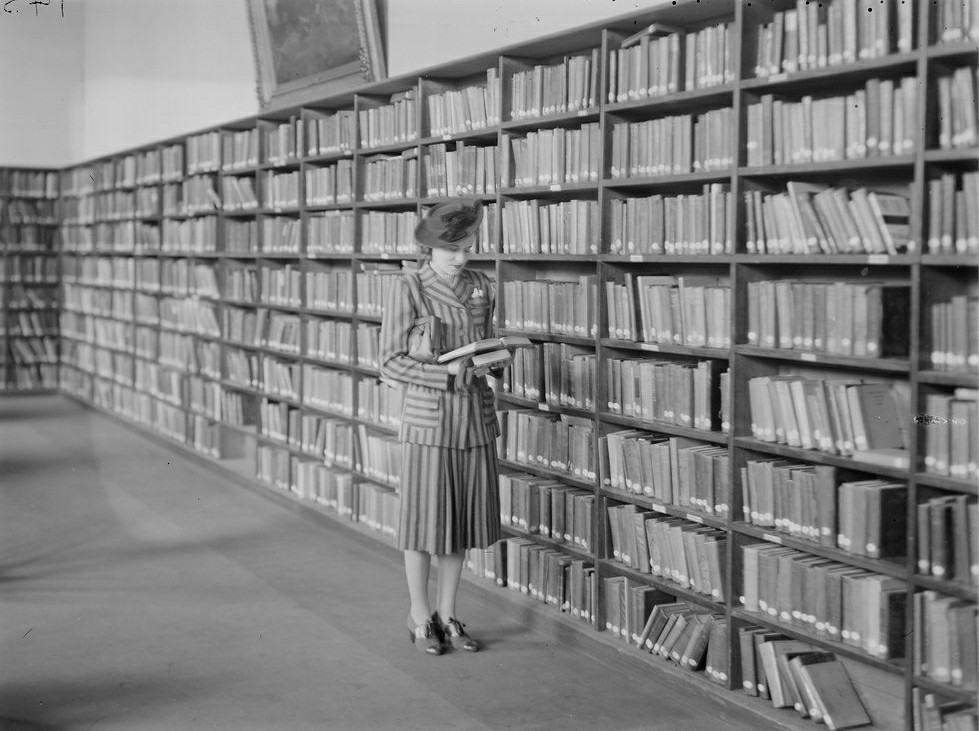
| They read non-fiction in Victoria. |
I can hear several of you out there going ick! (Take a moment to list the reasons why you don't like non-fiction. Then go find books that don't have those reasons.)
If you don't like non-fiction, you're reading the wrong kind. Believe me, there's a wide variety of non-fiction out there. If there is not a selection of non-fiction out there that would appeal to you, you must be a very dull person indeed. (Now, I doubt that, so it must be a case of you not having found it yet.)
When I say non-fiction, what are you thinking?
Have you considered:
Memoirs
Biographies
True-Crime
How-To/Manuals
Self-Help
Financial books
Magazines and Newspapers
and more?
These are all non-fiction. Essentially anything found in the "Dewey Decimal Classification" shelves at the library are non-fic. (Technically, fiction also belongs in DDC, under numbers such as 813, etc. But they are often shelved separately, as some people have issues telling fantasy from reality.)
If you are not a regular reader of non-fiction, how about you go browse the non-fiction section at the library and select something. Everything's arranged by category, so like stuff is easy to find.
Don't be afraid of non-fiction. It has its advantages:
1. You don't have to read the whole thing. Really. You can read bits and pieces and get out of it exactly what you want.
2. There's always another book just like it, if you do choose to read the whole thing, or want to know more.
3. If you don't like one book, go find another. (oh, wait. That works for fiction as well).
So... gonna give it a try? If you browse through my TBR piles, you'll often see some non-fic in there.
_________________________________
Here's some long-winded opinion on a few of the above-mentioned non-fiction categories:
Memoirs: These are real-life stories of people who have lived and shared this blue marble with you. Personally, I find it difficult to read memoirs, especially contemporary memoirs (as my preferred genre is escapist fiction). However, every once in a while I'll come across a memoir with a subject and theme so compelling I can't help but read it.
Truth can be stranger than fiction. Frex, I read a memoir last year of a mother who travelled to Central America in search of an exorcism for her rather obnoxious child. The exorcism worked. (I know a few children who could benefit from a Central American exorcism.)
In the memoir field, I prefer memoirs from history, or something so other-worldly it takes me away from my contemporary life and satisfies my escapist desires.
Biographies: Biographies are different from Memoirs. Memoirs are a single story from the life of a person. Biographies (and their evil twin Autobiographies) are The Story of the life of a person. There are plenty of biographies of people living (Frex, Dawn French's "Dear Fatty". hint: Fatty is the nickname for someone else.) and no longer with us (like Georgiana, Duchess of Devonshire).
I'm not terribly into the biographies of living people (with the exception of Dawn French. And I would completely read Richard Armitage's biography, simply because he keeps so much of himself a mystery). I prefer the biographies of those who are dead, the longer, the better. Again, it's that escapist in me expressing their preference.
Now, a word about autobiographies. I have a prejudice against them. I once railed against referencing an autobiography in a series of articles I once wrote. A miffed reader with a stick up her butt, a chip on her shoulder and an axe to grind took me to task. "How can you refuse to reference [a particular source]. It's [the article's subject]'s autobiography! You can't get more authentic than that!"
I strongly beg to differ. I dislike autobiographies as an "authentic" source mainly because they are auto. They are self-written. Unless they have been vetted by a Very Good Editor (which too many of them are not), they are coloured by the author's distorted view of themselves.
I'm sorry, Humanity, but far too many of us do not have an authentic picture of ourselves. I've read enough autobiographies to know that the authors are trying to present themselves as they wish the world to see them, and not necessarily as the world sees them.
That said, autobiographies do a very subtextually good job in presenting a person as they are. Y'all remember the kid from high school who thought he was so great? We all knew he wasn't.
True Crime: I consider this a cross between memoir and journalism. Lots of people enjoy true crime. Those sorts of people like keepin' it real.
I confess I read very little because I'm not a fan of crime on the whole, I dislike reality, and there's never enough info to satisfy my desire for a complete plot arc. Details go missing, and sometimes the crime does not get solved. This annoys me. I'll keep my Crime fictional, thank you very much. I wanna know whodunnit and that they get their just desserts.
How-To, Manuals, "For Dummies": Wanna know how to do stuff? This is the stuff to read. I especially recommend the "For Dummies" (or "The Idiot's Guide") series. These things are great!
Everyone can use a few more skillz. Can you change the oil on your car? Grab a manual and give it a go. Many libraries have them. Play the guitar? Guitar for Dummies, naturally. Want to make a beautiful three-egg sponge? Hah! Cookbook!
Pretty much anything you want to do, there's a book out there on how to do it.
Do manuals and How-To feel a bit overwhelming? Go lite and google life hacks for some clever and easy stuff.
Self-Help: Actually, the thought of anything to do with psychology makes my skin crawl (unless you're a neuropsychologist who loves scanning brains to see what makes 'em tick. That's cool). Yet there are so many self-help manuals out there.
I confess, I've read a dozen or so, usually at the insistence of other people. I really should read more, as they do give an interesting insight into how Humans tick.
Reading one and adhering to its principles is, in my opinion, a one-way ticket to Nutsville. Reading a dozen and gleaning wisdom from the chaff, that's not too bad an idea.
Now, Finance manuals. How-To or Self-Help? Dunno. I absolutely adore them, especially Paul Clitheroe and Mr Money Mustache.
Magazines and Newspapers: Yes, folks, the majority of these are non-fiction. And you read them.
Now, go expand your reading repertoire.
__________________
Her Grace is awfully fond of reading. She hopes you are too.

