 S is for Star, and really, you cannot talk about astronomy without mentioning stars. Impossible.
Anyone who's ever expressed the slightest interest in astronomy does so because of stars. You look up in the sky, see the stars, and go, "Cool!" Stars are what get us interested in space.
Here's an earworm to annoy you for the rest of the day, "Twinkle Twinkle Little Star" (the astronomically correct version):
Stars are the most obvious part of the universe because they shine so brightly along all the electromagnetic spectrum. I consider them a key component of the cosmos. They are the movers and the shakers. They are responsible for all the "metals" (ie elements heavier than H and He) out there. E V E R Y T H I N G out there that's not Hydrogen/Helium, is because of stars.
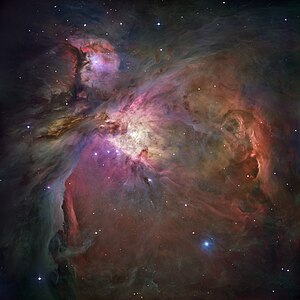
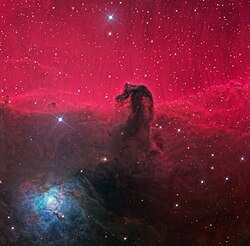
As you know, hydrogen makes up a good three-quarters of the universe. When that hydrogen (usually in a nebula) gets enough gravity to collapse together, fusion starts and you get a star.
Vital Stats of Stars
SizeStars range in weight (measured in solar masses or M☉) from about approximately 0.2 M☉ to humongous beasts pushing 150 M☉. Now, that might not seem like a very big range, seeing that one solar mass (M☉) equals the weight of our Sun at 1.98855 × 1030 kg. But if you look at the radii of these stars, the smallest is about 20% wider than Jupiter, but the biggest is a whopping 1500 times as wide as our Sun. Frickin' huge.
Here's a size comparison:
Also, the bigger a star, the faster it burns through its hydrogen. Really, really big hypergiants have been known to live for the brief moments of a few million years. Living fast, dying young, they leave a really impressive supernova/hypernova before letting its corpse collapse into a neutron star or even a black hole.
Smaller stars last a lot longer. Our own Sun will live about 10 billion years, whereas some red dwarfs could possibly live for trillions of years.
OGLE-TR-122b is the smallest main sequence star we've discovered so far that's still fusing hydrogen. If it got any smaller, it wouldn't have enough gravity to ignite fusion. Unless you're fusing, you ain't a star.
Colour
Stars range in colour, which also correlates with temperature.
Stars are classified according to colour(temperature), with blue stars being the hottest and red stars being the coolest.
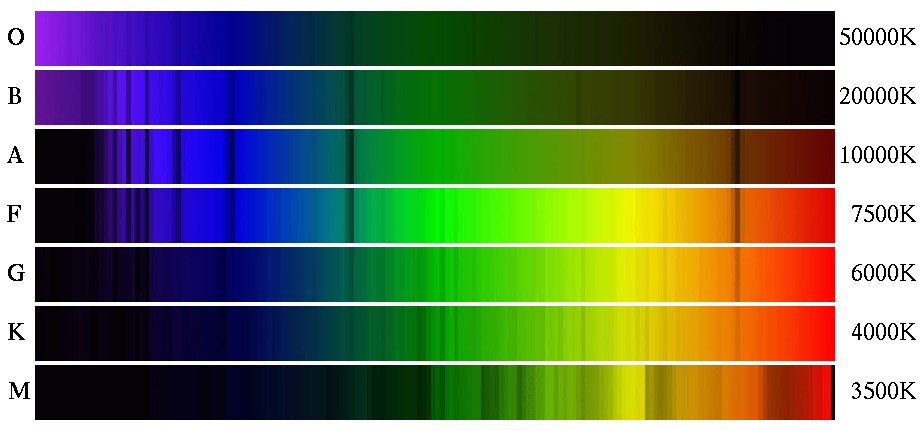
O B A F G K M
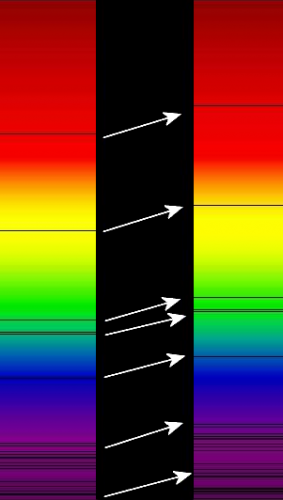
The spectra of star types. See how the spectra peak in certain colour ranges? That's why stars appear coloured.
Blue O-type stars tend to be 30-40,000 Kelvin.
Blue-white B-types are 20,000 K,
White A and F stars are about 8-10,000 K
G-type stars, like our yellow Sun, are about 6000 K
Red K and M-type stars can be as cool as 3000 K (For reference, you are around 310 K).
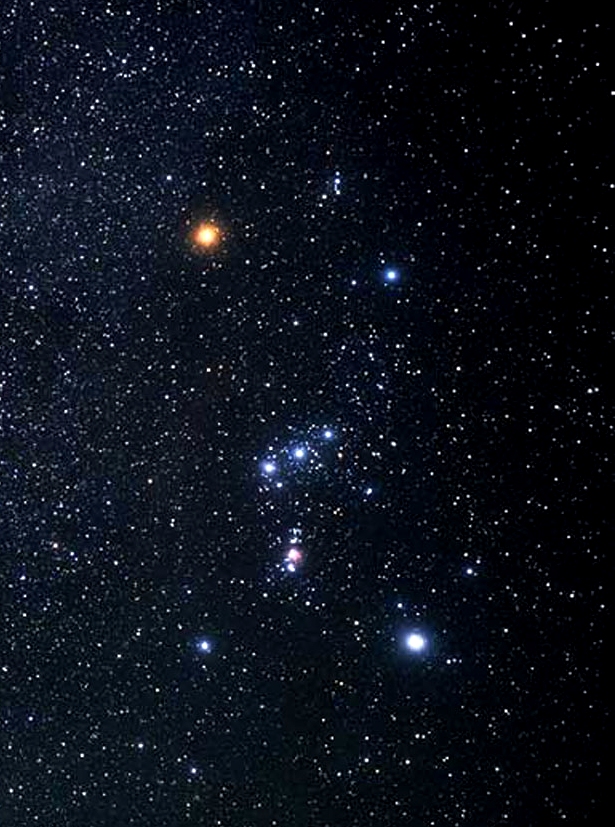
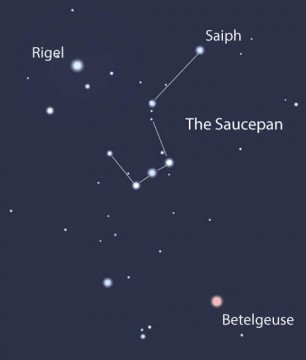
Look up in the night sky and see if you can tell what colour a star is? While most of them appear "white", compare nearby stars to see if you can detect a faint bluish cast or reddish cast. Betelgeuse in Orion is distinctively red, as is Antares in Scorpio. Rigel in Orion is rather blue.
Why aren't there any green stars?
Actually, there are. Any "white" star is actually radiating in the green part of the visible (optical) spectrum. Green happens to be right in the middle of the spectrum, so when a star is emitting green, it also emits red and blue. Combine all these together (additive colours), and they look white. Our Sun, a G2-type star is generally classified as Yellow-White. But if white is really green, that makes our Sun a yellow-green star. (Consider how much green light gets reflected by plants on Earth. That light's gotta come from somewhere.)
Birth and Death of a Star
So, a star is born from the gas of a nebula. After it gets over its initial teething phase, it settles into the Main Sequence, happily fusing its hydrogen into helium. It'll spend about 90% of its life like this.
Once it runs out of hydrogen, they move off the main sequence, do a few interesting things (like helium flashes, variable pulsing, puffing up like balloons), then die.
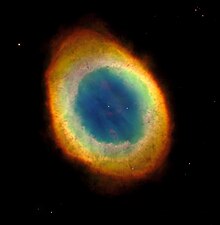
When it comes to the death of stars, the manner of its demise depends on its mass. For smaller mass stars, like our Sun, it'll inflate into a red giant, then with a gentle poof, shed its outer layers, leaving the cooling cinder of a white dwarf.
But if it's a massive star, especially of the live-fast-die-young category, it starts fusing everything into onion layers of elements until it reaches iron. Once that happens, fusion stop, the pressure keeping the star puffy ceases, the star collapses in on itself, rebounds, and dies most violently B A N G!! in a spectacular supernova.
Don't let the gentle spread of this light echo fool you. This time-lapse covers a period of four years. The light echo is about six light years across. We're talking some serious velocities here.
The energy released in this explosion is enough to start a new wave of nuclear reactions that fuses iron into the higher elements like gold and uranium and blowing them out into the universe.
Whatever is left over gets fused into neutrons and collapses down into either a neutron star or a black hole in the middle of a brand new nebula.
Meanwhile, the shockwave of a supernova can extend for several parsecs, rolling through any neighbourhood nebular clouds of hydrogen, possibly triggering some of it to collapse into new stars.
And thus, the cycle begins again.
Some people just like looking up in the skies. And that's okay. Do you have any favourite stars? What make them your favourites? I'm fond of Betelgeuse and Canopus.
No hardcore stuff today, unless you want to investigate more about V838 Mon which occurred in 2002.
___________________________
Her Grace is sometimes content just to stare up at the stars with MK-1 eyeballs.
Her Grace is sometimes content just to stare up at the stars with MK-1 eyeballs.













.jpg/500px-Orion_Nebula_with_proplyd_highlights_(captured_by_the_Hubble_Space_Telescope).jpg)